Somewhere in Canada today, a retired schoolteacher in her late sixties is watching the value of her condominium tick upward on a real estate app while her grown son, who works in logistics and earns more than she did at his age in nominal terms, cannot qualify for a mortgage on anything within an hour's commute of where he grew up. A federal policymaker is drafting a briefing note on the Canada Strong Fund while her deputy quietly flags the interjurisdictional complexities of the Canadian federation that make the Norwegian comparison legally unavailable. A small manufacturer in the Niagara Peninsula is trying to decide whether to borrow at rates that would have seemed punitive a decade ago in order to retool for a supply chain that may or may not survive the next round of American tariffs.
Canada in the mid-2020s is a society caught between the exhaustion of one political economy and the incomplete emergence of another, in which the distributional consequences of that interregnum fall, with a precision that is almost surgical, along generational lines. The country is faced with a very difficult combination of acute demographic decline, rising backlash from mismanaged immigration policy, and a historically high debt load, which will likely end its ability to rely on both continued immigration and debt accumulation to maintain social programs and living standards. Powerful structural incentives exist for a new and different model of political economy than the one inherited from the era of globalization, and its emergence will drastically change the lives of both young and old generations in Canada.
The Canada Strong Fund (CSF) is an important part of this transition. The CSF fits into a pattern of policy changes toward a higher inflation regime, a tightening of immigration policy, and a Canadian government trying to find its way in a deglobalizing world while trying to recover many of the industrial planning tools it lost amid the high tide of free trade. Indeed, Canada faces strong incentives to adapt, as its biggest trading partner, the United States has been aggressively pursuing economic and resource nationalism and will likely compete intensely for a shrinking global pool of migrant labour. Prime Minister Mark Carney has taken several steps since the start of his tenure which appear to be solidifying these shifts and concretizing a novel trajectory for Canada for the decade to come, at least.
The CSF has been branded as a sovereign wealth fund (SWF), but its aims do not coincide with the typical aims of sovereign wealth funds. SWFs that exist, most famously the one in Norway, for instance, are used to save profits from natural resource extraction, bolstering against the future impacts of a decline in price or a decline in production. This approach is unavailable to Canada at the moment due to the fact that the constitution assigns jurisdiction over natural resources to the provinces, and not the federal government. The national policy instruments previously available to the federal government, including a slew of import tariffs and local content requirements, have been significantly narrowed due to free trade agreements with the United States.
Given these handicaps, the Carney government has constructed CSF to use more indirect ways to manage wealth from the country’s natural resources. The CSF will support nation-building through directing private investment towards nationally beneficial infrastructure, not only through capital allocation but also through encouraging investment via instilling confidence in those projects. Along with the Canada Infrastructure Bank inherited from the Trudeau government, the CSF is gingerly moving back toward a model of state-led investment. And, despite its impediments, the Canadian political system at both federal and provincial levels benefits from a high level of centralization. Given the political difficulty involved in passing major spending cuts or substantial tax increases in democratic nations, governments have strong incentives to pursue such state-led, alternative approaches.
I. Terminal Demographic Decline
There are many possible issues that arise from a long-term sub-replacement birth rate. One of them is its inflationary economic effect. As explained by Charles Goodhart and Manoj Pradhan in their 2020 book The Great Demographic Reversal, higher labour scarcity is the main mechanism behind this inflationary effect. However, there are also other drivers, such as, for example, the shift in the numbers of savers versus spenders. As the number of non-working people rises, so does the number of non-producing consumers. Retirees will continue to consume goods, health care services, housing, etc., while producing little to nothing. This lowers the amounts of goods and services in circulation, thus pushing inflation higher. The stress is passed on to governments, who which face lower tax receipts and a higher proportion of the population requiring government-provided services.
While birth rate decline has been occurring since the late nineteenth century in Western nations, the effects were blunted by the postwar baby boom, the entry of women into the workforce, globalization, and urbanization. Globalization, in particular, provided aging Western nations with access to a huge, untapped young workforce from poorer nations and rural areas. Most notably, the opening up of China by Deng Xiaoping into global capitalism and that nation’s role as a mass producer of cheap goods amounted to a key driver of globalization from the 1980s onward, laying the groundwork for the low-inflation prosperity experienced even in light of declining birth rates. Countries differed in how they offset demographic decline—Japan relied more heavily on offshoring, while Canada and others relied more heavily on immigration—but both strategies depended on access to younger labour from abroad. Now, declining birth rates have effectively become a global phenomenon, and global labour supply has begun to dry out. Goodhart and Pradhan point to immigration from developed nations to developed economies peaking in 2007. Effects are further suggested by the fact that the average age of the immigrants entering Canada rose from around twenty-five years in the early 1970s to around twenty-nine years since 2016. (There is no evidence so far that the rise in average age is cyclical in nature, and record levels of immigration in the years following 2015 have done nothing to reduce the average age. Therefore, it is reasonable to assume that average age will either stay at these levels or increase.)
Another crisis facing the Canadian government is the enormous debt relative to gross domestic product, as the country has one of the highest public debt-to-GDP ratios in the world. Canadian citizens and corporations hold very high levels of debt themselves, especially mortgage debt. Canadian household and corporate debt both exceeded 100 percent of GDP as of 2024. With these debt levels, Canada has created a majoritarian segment of society that cannot tolerate market-clearing interest rates.
Removing socialized entitlements, such as health care and pensions, is naturally very difficult politically speaking, although fiscally it would resolve much of the budgetary shortfall resulting from a shrinking working-age population. Retrenchment of socialized health care and various pension supports has been happening to some degree in Canada, however. High-quality health care remains free even as the proportion of those over sixty-five has increased; though only comprising 20 percent of the Canadian population, this demographic accounts for 47 percent of health care spending. The over sixty-five group also utilizes nearly 100 percent of spending put toward Old Age Security (OAS), Guaranteed Income Supplement (GIS), and expenditures to support long-term care. These are the country’s most important expenditures by far; they are taken from current taxpayer dollars and are largely non-discretionary.
The principal reason why wholesale reform is politically untenable is that those over the age of sixty-five also represent the most active and populous voting base; thanks to more experience and interactions with a political system that was once less centralized and more open to democratic input, the members of this cohort are better at political manoeuvring. Canadian politicians are undoubtedly aware of the dramatic political turmoil that followed even modest reforms in the rest of the developed world (such as the raising of the retirement age from sixty-two to sixty-four in 2023 under President Macron in France) and are keen to avoid these kinds of outcomes.
If Canada wants to escape a debt-deflation cycle, it will have to manipulate interest rates and inflation in order to keep debt repayments below nominal GDP. Russell Napier, economic historian and hedge fund manager, has talked for years about the resource nationalism and financial repression that he sees as being driven by high levels of indebtedness among OECD nations. The framework he lays out, what can be called financial repression, has two elements: (1) a macroeconomic status quo in which inflation kept to a moderate to high level; and (2) governments forcing domestic investment into domestic bonds in order to keep demand for these artificially high, repressing yields. This settlement was in vogue throughout much of the postwar period (sometimes known as the “golden age of capitalism”) and it required a distinctly high level of government intervention and guidance of the economy.
But today, because of the aforementioned obstacles to continued high immigration, the existing working-age population of Canada will not be able to rely on new migrant infusions into the labour force in order to “save” the social programs that are now currently available for the over sixty-five demographic. They will instead be asked to carry a heavier tax burden to sustain programs which are paid for out of taxation of the wages of working-age people. The salve for working-age Canadians is that the heavier tax burden and higher inflation will be matched by larger bargaining power for higher wages, once immigration levels decline further. Whether this leads to a decline in living standards or not very much has to do with how successfully the government manages financial repression.
II. Financial Repression to Build a Nation
Historically, regimes of financial repression have combined moderate inflation with regulated financial institutions, preferential treatment for government bonds, directed lending, capital restrictions, and close coordination among the state, central banks, and private industry. This phenomenon emerges when conventional alternatives become politically or economically prohibitive. High interest rates threaten heavily indebted households, firms, and governments, while large tax increases, spending cuts, and reductions to pensions or health care remain electorally dangerous. By reducing existing debts in real terms and channelling capital toward infrastructure and productive development, financial repression offers governments a means of managing demographic decline while rebuilding national economic capacity. It will therefore become an increasingly important concept for understanding Canadian political economy in the years ahead.
The policies to enact financial repression and inflation control will come from a highly centralized and powerful executive branch, which may work in close coordination with central banks. An effective merging of the central bank and the executive branch will occur, if not de jure then certainly de facto, amounting to a reversal of the worldwide trend of central bank independence that had been a hallmark of the previous economic paradigm. The symbiosis may be less dramatic in Canada only because ultimate democratic control over the central bank was formalized following the 1959–1961 Coyne Affair that saw open conflict between the government of John Diefenbaker and Bank of Canada Governor James Coyne, who favoured “tight money” against the prime minister’s wishes. The prospect of an executive branch with more direct political influence over the central bank was most recently articulated by Conservative Party leader Pierre Poilievre, when he promised to replace incumbent governor Tiff Macklem, whom he blamed for inflation (seeming to reverse the positions of Diefenbaker and Coyne); these comments were made some years ago when Poilievre still possessed a firm polling lead and looked likely to form government.
Instead, the Liberals won the election and have since cemented their majority in Parliament. During his time as the governor of the Bank of Canada (2008–2013), Carney was arguably more dovish than Tiff Macklem. Carney drastically cut interest rates during the global financial crisis and defended a flexible inflation target. He has been vocal about the importance of industrial policy in managing economic challenges. As governor of the Bank of England (2013–2020), he was similarly pragmatic with his actions, though he espoused support for a stricter monetary approach at times. Thus, even while holding some contradictory philosophical positions, Carney has shown himself to be flexible given a changing situation. Once in politics as Liberal Prime Minister, he has overseen a tightening of immigration policy, leading to a net decline in population in Q1 2026. He has also softened policy around climate change, notably cancelling the consumer carbon tax.
Taken together, the inflationary effects of population decline, monetary policy and the economic growth from the CSF, Carney is moving in a way consistent with laying down a framework of financial repression. While details are still outstanding, the CSF would help accomplish this by, first, directing capital towards national resource projects, energy infrastructure, ports, trade corridors, and critical minerals. Second, the government will be “investing alongside private capital in this growing pipeline of projects and companies,” thereby reducing perceived risk and encouraging the redirection of funds into these projects. The CSF has also proposed an explicit retail investment product. It could encourage Canadians to direct a portion of their household savings toward nationally strategic investments. While none of this represents literal capital controls, it is clearly seeking to keep capital invested in the country, thereby bolstering Canada’s GDP, improving the standing of its bonds, and keeping yields in check.
III. The Next Political Economy
The ultimate success of financial repression in Canada will depend not only on execution, but also on the vantage point of the people affected. It will require governments to work in direct or indirect coordination with central banks and industry, balancing several contradictory aims. A financially repressed economy will need inflation to be high enough to reduce the debt burdens but low enough to preserve political legitimacy. Labour scarcity will at once boost wages and worker bargaining power, but also add more fuel to an already inflationary environment. Financial repression also means tightened control over the flow of capital across borders, which may require a more draconian political approach than Canada has seen in decades. Canada appears to be entering a political economy fundamentally different from that which prevailed during the globalization era.
The distributional consequences of financial repression are not uniform, and the political coalitions it generates will reflect that unevenness in ways that the current national unity consensus around Carney's nation-building agenda has not yet been forced to confront. Different Canadians will experience the emerging order through the specific lens of what they own, what they owe, what they earn, and what they consume, and those four variables produce a more complex generational and class picture than the simple young-versus-old framing suggests.
Older homeowners with paid-off or near-paid-off mortgages are often assumed to be the cohort best positioned to weather moderate inflation. But this assumption requires qualification. Consider that a paid-off home is an asset that generates no debt to be eroded by inflation, and in an environment of population decline and demographic aging, there is no guarantee that housing prices will rise faster than the general price level: the long stagnation of the Japanese housing market following its 1980s crash, from which it never fully recovered, offers a cautionary precedent for what asset deflation looks like when demographic contraction is severe enough. Their fixed-income assets face yield compression, and the services they disproportionately consume, notably health care, tend to inflate faster than the general index. The political coalition defending existing entitlements will be internally divided between asset-rich but income-constrained retirees in ways that will become more visible as the regime matures.
Younger mortgage holders occupy a position that is genuinely more advantageous than it first appears. The core dynamic of financial repression is a transfer of wealth from creditors to debtors, i.e., from those who hold claims on money to those who owe it, and younger Canadians carrying large mortgages are, structurally, debtors. On the one hand, inflation reduces the real value of their nominal debt burden over time; the household that borrowed $800,000 in 2024 will find that burden somewhat lighter in real terms if inflation runs at four percent for a decade. The key variable is the mortgage rate relative to the inflation rate: a borrower whose rate is at or below the rate of inflation is effectively paying off debt in progressively cheaper dollars, a form of implicit wealth transfer that financial repression institutionalizes and sustains. On the other hand, the wages required to service that debt must keep pace with both inflation and the higher carrying costs that accompany it, and there is no guarantee they will. Whether younger mortgage holders benefit or suffer from financial repression depends almost entirely on whether the labour scarcity the demographic transition produces actually translates into higher real wages, which in turn depends on the bargaining power of workers in their specific sectors and the degree to which productivity gains are shared rather than captured by capital.
Renters face the starkest exposure: they hold no asset that inflates alongside prices, their wages may lag, and their housing costs are subject to the same inflationary pressure as everything else without the offsetting benefit of debt reduction. The generational framing of financial repression's distributional effects is therefore real but incomplete. The more precise formulation is that financial repression represents a structural transfer of wealth from creditors to debtors, and since older Canadians are disproportionately creditors, whether as mortgage-free homeowners, bondholders, or holders of fixed-income pension assets, and younger Canadians are disproportionately debtors, the generational divide and the creditor-debtor divide largely overlap, even if they are not identical.
Workers in the strategic industries the CSF is designed to finance (energy infrastructure, critical minerals, advanced manufacturing, digital infrastructure, etc.) stand to benefit if the fund succeeds in directing capital toward sectors with genuine productivity potential and if the resulting wage gains are broadly shared. Workers in sectors exposed to AI-driven automation face a more uncertain trajectory, which brings us to the variable that may ultimately dwarf all others in its consequences for the emerging political economy.
During the globalization era, the deflationary pressure that kept wages contained and goods prices low came primarily from access to cheap foreign labour: Chinese manufacturing workers, South Asian service workers, immigrant labour in construction and care. That pressure is now diminishing as global labour supply tightens and immigration policy contracts. The question that financial repression frameworks do not yet adequately address is whether artificial intelligence and related automation can perform a comparable economic function: expanding the productive output of each worker and reducing the labour required in administration, logistics, manufacturing, health care, and professional services, thereby offsetting the inflationary pressure of labour scarcity without requiring either population growth or foreign dependency.
The analogy is imperfect but instructive. Just as the opening of China to global capitalism in the 1980s created a deflationary wave that allowed Western governments to maintain social programs and living standards despite deteriorating demographic ratios, AI-driven productivity gains could in principle allow Canada to sustain and expand its productive capacity with a smaller and older workforce. The crucial difference is the distribution of those gains. The cheap labour wave of globalization distributed its benefits widely, through lower consumer prices that improved living standards across income levels, while concentrating its costs on manufacturing workers whose jobs were displaced. AI's distributional profile may be the reverse: its productivity gains are likely to accrue initially and disproportionately to the firms and asset owners who deploy it, while its costs are distributed across the workers whose tasks it replaces or devalues. Whether AI becomes a broad-based productivity revolution or a mechanism of further wealth concentration will depend less on the technology itself than on the institutional framework within which it diffuses, which returns us, inescapably, to the Canada Strong Fund.
The CSF is not currently designed as an AI diffusion vehicle, and its mandate as publicly described is oriented toward physical infrastructure and resource development rather than technological adoption. But the demographic and fiscal logic of the emerging political economy suggests it will need to become one if the financial repression regime is to generate the broad-based productivity gains required to make it politically sustainable. A fund that finances pipelines and port infrastructure while leaving AI adoption in health care, education, and public services to market forces risks producing exactly the distributional outcome that would make the regime intolerable: higher inflation, constrained savings, and productivity gains flowing to a narrow class of technology owners while the workers and households bearing the costs of financial repression see no corresponding improvement in wages or services.
Financial repression is politically tolerable when the people asked to accept constrained savings and moderate inflation can see those constraints converting into higher real wages, better infrastructure, and greater national productive capacity. It becomes politically toxic when the constraints are visible and the returns are not, when workers and households bear the costs while governments, incumbent asset owners, and politically connected firms capture the benefits. The CSF will not determine alone whether Canada's emerging political economy produces a credible developmental and generational bargain or merely a sophisticated mechanism for preserving inherited debts and entitlements. But it will be one of the most legible tests of that question available to ordinary Canadians, and its evolution over the next decade will say a great deal about whether the country has genuinely learned from the failures of the era it is trying to leave behind.
Leila Mechoui is a writer and researcher based in Ottawa.
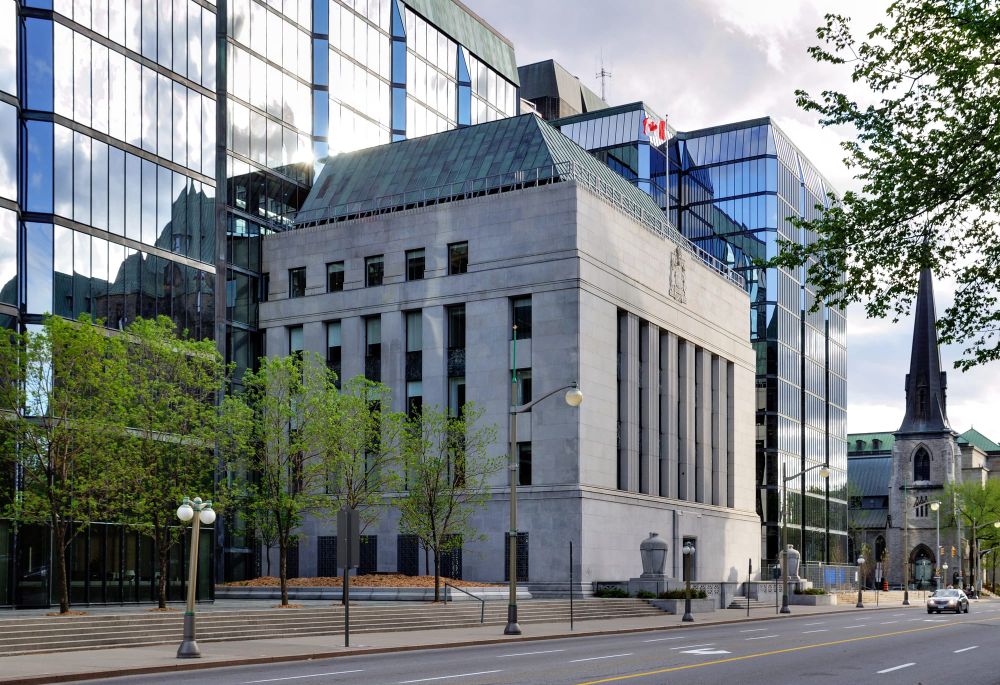
Article photo by Wladyslaw, licensed under Creative Commons Attribution-Share Alike 3.0 Unported license.