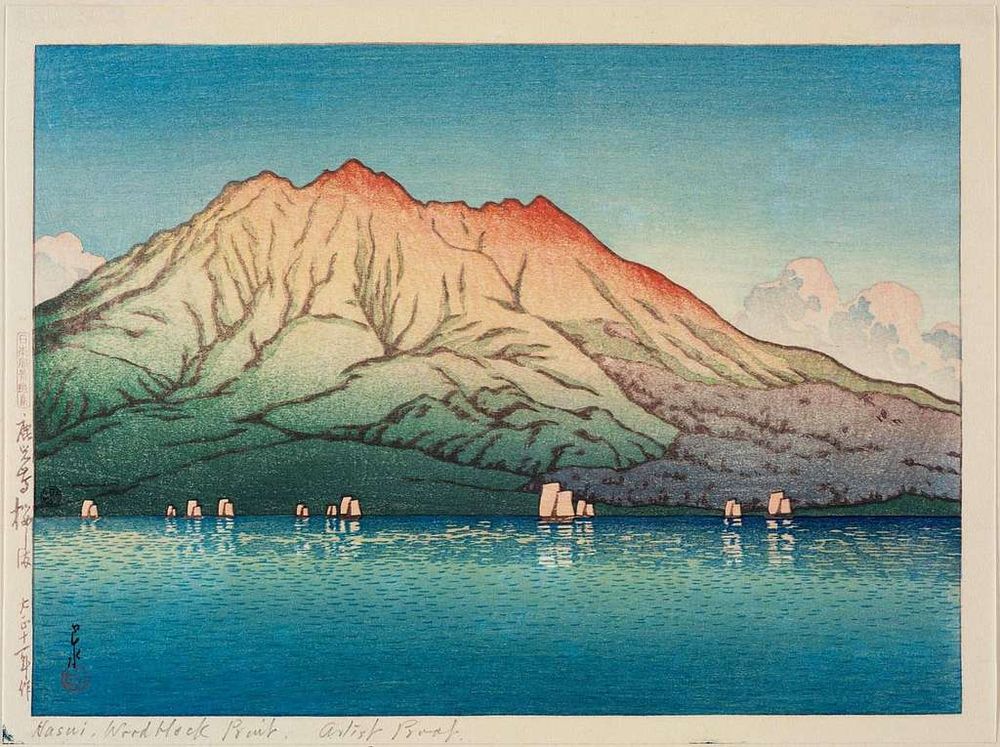
On August 5 2026, an oil tanker from Canada ventured across the Pacific and landed in the port of Kagoshima carrying 750,000 barrels of Alberta crude oil via the Trans Mountain Pipeline that runs from Alberta to British Columbia. This came as a direct result of the war in Iran, amid the chaos and unpredictability caused by the United States, which created a dire necessity for Japan to diversify its energy sources. Japanese Prime Minister Sanae Takaichi celebrated the moment by giving a rare nod to Canada, proclaiming it as an important partner.
The Japanese attitude toward diversification mirrors the Canadian; despite being on opposite ends of the Pacific, Canada and Japan both have long defined themselves by their relationships with the United States, establishing entrenched dependencies on the American global economic and security order. The challenge posed by that order’s disintegration has forced both Ottawa and Tokyo to seek alternatives. This should make them natural partners for the emerging era, and Canada’s capacity to solidify its bond with Japan, a fellow developed and democratic G7 power, is the true test of any real attempt to realize the globally diversified, post-American trading system that Canadians have aspired to since the start of the trade war with Washington.
Despite Takaichi’s jubilation, however, the reality of the matter is that the thought of Canada as an independent partner might well be met with dismissal. Among Japan’s policymakers, Canada is generally regarded as a pleasant and respectable but unserious country, more concerned with high-minded idealism than serious business or strategic cooperation. This is, of course, if Canada is thought of at all: more often than not, the country is hardly seen as a separate geopolitical entity from the United States. Until recently, there was good reason for this view and many Canadians might have even agreed with it. But it reflects the status quo before 2025, and Japan has not had much of a chance to reshape its policies toward Ottawa to reflect what’s changed.
Similarly, in Canada, Japan is only dimly perceived. When it comes to its global relationships, Canada tends to think in a binary between Europe and the United States, rarely reaching across the Pacific with any seriousness in its strategic imagination. On the rare occasions when Canadians think about Asia, it is usually in terms of the challenges and competitors the region presents. Most Canadians have at least a vague, if superficial and essentialized, conception of China, or even India, as countries that gave rise to many of Canada's foreign policy challenges during the Justin Trudeau years. Yet these perceptions remain distant and impersonal, framed in sweeping generalizations and supported by little substantive understanding of the countries and societies they purport to describe.
I. The Reactive Habit
Canada was among the last major Western countries to articulate a comprehensive approach to the Indo-Pacific, finally releasing its strategy in 2022. This was remarkably late compared with its peers. The United States launched its “Pivot to Asia” under the Obama administration, followed by sustained focus on the region in the succeeding Trump and Biden administrations. Even post-Brexit Britain, under Prime Minister Boris Johnson, had already announced its Indo-Pacific tilt in 2021. For too long, Canada’s engagement with Asia was characterized less by a coherent strategic vision than by a reactive, improvisational approach to foreign policy. Ottawa pursued trade agreements and commercial opportunities across the region, only to play matters by ear when geopolitical complications arose. The consequences of this approach became painfully apparent during the infamous “canola crisis,” when Canada found itself ill-prepared to confront the weaponization of trade in some of the world's fastest-growing markets.
These shortcomings extend well beyond China and canola. Throughout a decade of growing Asian investment in energy infrastructure, Canada repeatedly struggled to capitalize on opportunities to develop its Pacific energy trade. Japan offers a particularly revealing example. Following the 2011 Fukushima nuclear disaster, Tokyo embarked on a major reassessment of its energy security strategy. Japan had originally developed nuclear power partly to reduce its dependence on volatile Middle Eastern oil markets, but Fukushima exposed the vulnerabilities of that strategy. With much of its nuclear generating capacity shut down, Japan increasingly turned to liquefied natural gas (LNG) to meet its energy needs, while seeking to diversify its suppliers and reduce its exposure to geopolitical instability. The resulting expansion of LNG demand and investment presented Canada with an extraordinary commercial opportunity. With abundant natural gas reserves and comparatively direct access to Asian markets through the Pacific coast, Canada was well positioned to become a major supplier. Yet despite substantial interest from Canadian and foreign investors, regulatory uncertainty, infrastructure constraints, and the absence of a coherent Pacific energy strategy hindered the country's ability to capitalize fully on this opening.
The fate of the Northern Gateway pipeline illustrates the broader failure to connect Canada's energy potential with the commercial opportunities emerging across Asia. Proposed in 2010 by Calgary-based Enbridge, the project would have connected Alberta’s oil sands to a marine terminal at Kitimat, British Columbia. Kitimat’s deep-water, ice-free harbour and proximity to trans-Pacific shipping routes made it an attractive gateway to Asian markets. Northern Gateway's central commercial proposition was straightforward: it would enable Canadian crude oil to reach growing Asian economies, diversifying Canada's export markets and reducing its overwhelming dependence on the United States. Although distinct from the LNG infrastructure Japan was seeking, the project reflected the same underlying opportunity to transform Canada into a major Pacific energy supplier.
For Canadian energy producers, inadequate transportation and export infrastructure has long been among the greatest obstacles to expanding into Asian markets. Pipelines, marine terminals, and LNG export facilities are essential to overcoming these constraints and converting Canada's resource abundance into sustained commercial relationships across the Pacific. Northern Gateway ultimately collapsed amid regulatory disputes, environmental concerns, and failures in consultation with affected Indigenous communities. A federal court overturned its approval in 2016 because of inadequate Crown consultation, and the federal government subsequently rejected the project. Whatever the legitimate concerns surrounding its development, the outcome illustrated a larger strategic failure: Canada's inability to reconcile domestic regulatory and political obligations with its long-term ambitions as an energy exporter. At a time when Asian economies were actively seeking new suppliers and investing in energy security, Canada struggled to establish the infrastructure and policy certainty necessary to meet that demand.
Enbridge’s Northern Gateway proposal received federal approval under the Harper government in 2014 but soon encountered fierce opposition from environmental organizations and several Indigenous nations. Opponents argued that the pipeline threatened Indigenous land rights, traditional livelihoods, and the ecological integrity of communities along its proposed route. Concerns centred particularly on the risk of oil spills and the potential consequences for local fisheries, ecosystems, and coastal economies. Although several First Nations supported the project, others remained firmly opposed, placing considerable responsibility on Ottawa to fulfil its constitutional duty to consult and accommodate affected communities. Yet it was precisely here that the federal government faltered. During Phase IV of the consultation process, federal officials rushed negotiations, failed to engage meaningfully with Indigenous concerns, and inadequately addressed questions about environmental risks and their mitigation. In 2016, the Federal Court of Appeal quashed Northern Gateway’s approval, finding that the Crown had failed to discharge its duty to consult. The shortcomings were serious but potentially remediable: the court returned the matter to the federal government for reconsideration, leaving open the possibility of renewed consultations. Rather than pursue that course, the Trudeau government rejected the project outright, while separately approving the expansion of the existing Trans Mountain pipeline to the Vancouver area.
The consequences of Canada's prolonged struggle to develop Pacific export infrastructure have become increasingly apparent. Although the Trans Mountain Expansion eventually entered commercial operation in May 2024, its completion came after years of delays, cost overruns, and missed commercial opportunities. Only recently has Canada begun to reap the benefits of substantially expanded access to Asian energy markets. Statistics Canada reports that crude oil exports through British Columbia increased more than sixfold in the first year following the expansion's opening, with China, South Korea, India, and other Asian economies emerging as important destinations. The arrival of Canadian crude at Japan’s Kiire oil terminal in Kagoshima Prefecture in August 2026 offered another illustration of the opportunities that Pacific access makes possible. Such shipments might conceivably have become routine a decade earlier had Canada pursued its export infrastructure with greater urgency and consistency.
The larger failure was one of strategic ambition. Canadian producers and investors recognized the enormous commercial potential of Asian energy markets, yet their efforts were repeatedly constrained by inadequate infrastructure, regulatory uncertainty, political indecision, and Ottawa's reluctance to treat Pacific market access as a national economic priority. Canada's overwhelming dependence on the United States as an energy customer was too often accepted as a permanent feature of its economic geography rather than a vulnerability to be overcome. Meanwhile, competitors such as the United States moved aggressively to establish themselves as major energy suppliers to Asia, securing commercial relationships and market share while Canadian projects languished. The resulting pattern should be deeply frustrating. Opportunities to forge enduring economic partnerships across the Pacific were repeatedly squandered, less for want of resources or willing investors than for a failure to translate commercial possibilities into coherent national priorities. Canada has too often approached Asia as a distant market to be considered when convenient, rather than as a region central to its long-term prosperity. Even now, there is reason to wonder whether Ottawa has fully escaped that habit.
II. A Partnership Without Traffic
Under Prime Minister Mark Carney, Canada has begun to articulate a more ambitious approach to Japan, culminating in the establishment of the Canada–Japan Comprehensive Strategic Partnership (CSP) in March 2026. The agreement forms part of Carney’s broader effort to reorient Canadian foreign policy toward Asia and diversify the country’s economic relationships beyond its overwhelming dependence on the United States. Japan presents considerable opportunities for Canadian exporters and investors. Its substantial energy needs offer a potentially lucrative market for Canadian oil and natural gas, while the two countries already enjoy deeply integrated automotive industries and longstanding commercial relationships. At a time of mounting uncertainty over American trade policy, a stronger economic partnership with Japan could help reinforce Canada's economic resilience and reduce its exposure to disruptions in the North American market.
The CSP places particular emphasis on the principles of rules-based trade, economic predictability, and secure access to critical resources, commitments that carry an unmistakable, if diplomatically understated, rebuke to the protectionist policies of the Trump administration. Beyond these broad declarations, the partnership outlines practical mechanisms for strengthening bilateral cooperation in cybersecurity, defence, energy security, advanced technologies, and academic and cultural exchanges. Among its most significant provisions are commitments to establish new bilateral dialogues on cybersecurity and economic security, encourage greater two-way investment, and deepen collaboration between Canadian and Japanese research institutions and businesses.
These measures are intended to encourage Canadian investment in Japanese industries, attract Japanese capital into Canada's energy and technology sectors, and strengthen the commercial and institutional foundations of an enduring partnership. Although the agreement’s ultimate significance will depend on its implementation, the CSP represents one of the most comprehensive frameworks yet established for advancing Canada's relationship with Japan.
Carney’s wider engagement with Asia has likewise marked an ambitious attempt to position Canada more centrally within an emerging international order in which middle powers must exercise greater independence and initiative. Ottawa has moved to deepen cooperation with South Korea, particularly in energy security, critical minerals, strategic resource stockpiling, and the development of more resilient supply chains. Perhaps more strikingly, Carney has pursued a rapprochement with China, negotiating reduced barriers to Canadian agricultural exports in exchange for renewed access to the Canadian market for Chinese electric vehicles. These developments have attracted considerable attention, as has China's introduction of visa-free travel for Canadian citizens in February 2026, a symbolically significant gesture in the restoration of bilateral relations.
Together, these efforts suggest a government increasingly willing to treat Asia as a central arena of Canadian economic and diplomatic engagement. Yet the CSP remains perhaps the clearest expression of this new approach. It establishes a concrete institutional framework through which Ottawa and Tokyo can translate shared economic interests and geopolitical concerns into lasting cooperation. Whether that promise is realized will depend on Canada's willingness to sustain the political attention, investment, and strategic consistency that have too often been absent from its engagement with the region.
The CSP’s most visible early achievement came in June 2026, when Ottawa organized a major Team Canada trade mission to Tokyo, bringing together nearly three hundred delegates representing approximately 175 Canadian organizations. It was the largest Team Canada trade mission to the Indo-Pacific since the program's establishment in 2023, with defence, energy, natural resources, and advanced technologies occupying prominent places on the agenda. The mission was celebrated as a significant diplomatic and commercial success, producing 14 agreements with a combined estimated value exceeding $1.7 billion. By any conventional measure, the CSP appeared to be gathering momentum, with concrete initiatives translating the partnership's broad ambitions into commercial opportunities. Yet the underlying trade figures tell a more complicated story. In Tokyo, the ultimate measure of success will be found in sustained commercial relationships and expanding market share, rather than diplomatic declarations or the ceremonial achievements of trade missions.
Indeed, the underlying trajectory of Canada–Japan trade raises questions about how quickly these new linkages can deliver meaningful results. According to Global Affairs Canada's figures for the first eight months of 2026, Canadian merchandise exports to Japan declined by 6.8 percent compared with the corresponding period in 2025, while imports from Japan increased by 26.5 percent. The resulting imbalance underscores a persistent weakness in Canada's commercial relationship with Japan: Canadian businesses have struggled to expand their presence in the Japanese market even as Japanese companies have established substantial positions in Canada. The March agreement also failed to produce the headline investment commitments announced during Carney’s accompanying visits to Australia and India, where agreements worth billions of dollars were unveiled. Although the subsequent June trade mission delivered significant commercial deals, the broader challenge remains one of converting diplomatic goodwill and institutional cooperation into sustained, diversified Canadian exports and investment.
Despite the proliferation of agreements and incentives, Canadian businesses have often been reluctant to commit the resources necessary to establish a durable presence in Japan. Entering the Japanese market requires considerable patience, specialized knowledge, sustained relationship-building, and a willingness to navigate unfamiliar commercial practices. For companies accustomed to the relative ease of trading with the United States, these demands can appear daunting, particularly when the returns are uncertain and the costs of entry are substantial. The reluctance is understandable from the perspective of individual businesses, but its cumulative effect poses a serious problem for Canada’s national trade diversification strategy. Ottawa can negotiate agreements, organize delegations, and establish the institutional machinery of economic cooperation, but the success of these efforts ultimately depends on Canadian firms being willing and able to take advantage of them. The CSP has begun to address the diplomatic side of Canada’s longstanding difficulties in Asia. Whether it can overcome the commercial habits that have perpetuated those difficulties remains a much more consequential question.
III. Constituencies for Trade and Engagement
For many Prairie farmers, Canada’s efforts to expand agricultural exports into Asia have become a source of frustration as much as opportunity. Whether dealing with China or Japan, producers have repeatedly encountered regulatory hurdles, market uncertainty, and logistical constraints that threaten to undermine the benefits of diversification. Too often, farmers have found themselves treated as bargaining chips in wider diplomatic disputes rather than as reliable commercial partners in Canada’s engagement with the region. Agriculture is an inherently long-term business, governed by planting cycles, capital investments, and supply arrangements that depend upon predictable access to markets. Sudden regulatory changes, trade restrictions, and shifting political priorities can therefore inflict considerable damage on producers whose livelihoods cannot easily adjust to the whims of international diplomacy.
China’s recurring restrictions on Canadian canola offer perhaps the most conspicuous example, while Japan presents a different set of challenges involving stringent regulatory requirements, complex distribution systems, and export bottlenecks. Tariffs are only part of the problem. As Canadian agricultural industry representatives have emphasized, non-tariff barriers involving licensing, certification, permits, and regulatory compliance can prove even more formidable roadblocks to market access. Although Canadian agriculture has established significant commercial relationships in Japan, these persistent challenges illustrate the difficulty of turning formal trade agreements into dependable opportunities for producers. Decades of regulatory complications, logistical uncertainty, and geopolitical disruptions have fostered considerable skepticism among exporters, discouraging some from making the sustained commitments necessary to expand their presence in Asia.
Yet the renewed threat of American protectionism has fundamentally altered this calculation. What was once a desirable exercise in diversification has increasingly become an economic necessity. The strongest argument Ottawa can make to Canadian businesses is therefore one of long-term resilience: the costs of establishing a presence in markets such as Japan must be weighed against the considerable risks of remaining overwhelmingly dependent on a single trading partner. Diversification may be expensive and difficult, but the economic security it promises could prove invaluable during future trade disputes.
Fortunately, Canada’s efforts to deepen its relationship with Japan coincide with a significant cultural opportunity. Among younger Canadians especially, familiarity with Japan has grown through decades of cultural exchange and the extraordinary international success of Japanese entertainment, consumer products, and popular culture. Franchises such as Nintendo and Pokémon, together with anime, manga, and Japanese video games, have become familiar fixtures of Canadian cultural life since the 1990s. This enthusiasm has also found expression in education. The Japan Foundation’s 2026 directory of Japanese studies institutions identifies 39 participating Canadian universities offering various opportunities for Japanese language instruction and the study of Japanese history, culture, and society.
Interest has extended well beyond the classroom into tourism, where Canadian visits to Japan reached record levels in 2025, exceeding 688,000 arrivals. These developments suggest that the cultural and psychological distance separating Canada and Japan may be considerably narrower for younger generations than for the businesses and policymakers who have traditionally shaped the bilateral relationship. This reservoir of goodwill and familiarity presents an opportunity to cultivate a new generation of Canadian entrepreneurs, professionals, and investors willing to pursue careers and commercial relationships in Japan. Cultural affinity alone cannot overcome regulatory obstacles or guarantee commercial success, but it can help supply the personal relationships, linguistic competencies, and willingness to engage upon which more enduring economic partnerships depend. Canada’s challenge is to translate this growing popular enthusiasm into a deeper and more sustainable commercial presence.
One can imagine a future where through comprehensive deals like this one, more young Canadians can have the opportunity to build a network within Japan in whatever their field may be. Shared research, entrepreneurship, arts, and other sectors can all serve to deepen our position in a country that can be a vital part of our strategic and economic future. Just as Canada is making strides to encourage young Canadians to study in Europe, it should make a comparable effort in Asia. Any Canadian model for entry into the Erasmus program should have an equivalent in the east. There is just as much interest among Canadians in building futures within Asia as there is in Europe. This could all be fueled by a shared private and public interest in putting our best foot forward in the region and providing as many opportunities as we can for young people to play a role in developing these future partnerships.
Mirroring Canadians, Japanese students already flock to Canada to study abroad, develop their English, or engage in tourism. Japanese students look for opportunities at Canadian companies and forge ties that can be utilized in fostering the development of a private sector culture between the two countries. The mutual intention and interest are clear. Many Japanese journalists and interest groups have gone beyond merely entertaining the idea, emphasizing the importance of closer cooperation following the Strait of Hormuz crisis.
Beyond energy, Canadian soft power has been seeping into the Japanese political consciousness. Many in Japan’s policy commentariat have praised Carney’s Davos speech. Yukio Noguchi, a professor from the University of Hitotsubashi in Tokyo, called Carney’s speech an important lesson for Japanese politicians and argued that Japan should actively work to uphold the maintenance of the rules-based international order. Professor Noguchi also emphasized that Carney’s speech should not be interpreted as pure idealism by the Japanese but rather as a recognition that middle power relationships are paramount for Japan’s future. These attitudes are increasingly widespread in Japan. Several articles have been published in the premier Japanese business publication Gendai Business, (現代ビジネス) calling for Tokyo to take similar approaches in the face of the Trump administration’s aggressive weaponization of trade leverage. After all, Japan faces many of the same challenges as Canada, from energy security to trade diversification. The two countries mirror each other across the Pacific, albeit from opposite sides of the market: Japan seeks reliable imports, while Canada seeks export opportunities. Any real conception of a more substantial partnership is still in its infancy, but there has arguably never been more of an appetite in East Asia for developing ties with Canada.
The first step toward a more enduring Canada–Japan partnership must be the cultivation of mutual understanding and commercial familiarity, relationships that cannot be established through treaties alone. Canada’s energy sector has been among the pioneers of its commercial engagement with Japan and will likely remain at the forefront of this emerging relationship. How Canadian energy companies conduct themselves under the CSP will help establish the reputation of Canadian businesses more broadly, shaping perceptions of Canada’s reliability, commercial sophistication, and commitment to long-term cooperation. Companies such as Trans Mountain Corporation and AltaGas, which have helped expand Canadian energy exports across the Pacific, are already demonstrating the possibilities of sustained engagement with Japanese markets. Their success could establish a model for other sectors, from agriculture and mining to automotive manufacturing, technology, and entertainment. Yet energy need not define the limits of the partnership. The CSP offers an opportunity to deepen existing relationships while cultivating new ones, establishing a framework for commercial cooperation that could eventually serve as a blueprint for Canada's wider engagement with Asia.
The foremost threat to this ambition, however, comes from an old and familiar temptation: Canada's tendency to retreat into the economic comfort of its relationship with the United States. Amid the ongoing trade war, the supposedly defunct Keystone XL pipeline has resurfaced as a potential instrument of Canada–U.S. trade negotiations. Carney himself reportedly raised the prospect of reviving the project in discussions with Trump, offering expanded energy cooperation as a possible concession in exchange for relief from American tariffs. Although the original project remains cancelled, the danger is that a renewed commitment to expanding southbound pipeline capacity could reinforce the very dependence that Canada's diversification strategy is intended to overcome. Canadian crude transported through American pipelines to Gulf Coast refineries and export terminals could still reach international markets, including Asia, but only by passing through an additional layer of American infrastructure and commercial intermediaries. Such an arrangement would preserve Washington's considerable influence over Canada's energy trade, while weakening the commercial incentive to develop direct export capacity along Canada's own Pacific coast.
For Canada to achieve genuine economic resilience, expanding direct access to Asian markets must therefore become a lasting national priority. Ottawa’s October 2026 designation of the proposed Pacific Link pipeline as a project of national interest suggests that this imperative is beginning to receive greater attention. Yet the real test will be whether such commitments can survive political changes, regulatory delays, and the persistent gravitational pull of the American market. Expanding energy exports to the United States need not be incompatible with diversification, but it cannot serve as a substitute for developing Canada’s own Pacific infrastructure.
IV. A Test of Commitment
Canada has the deals and it’s building the capacity, yet it consistently fails to push things over the edge and commit to Asia. The pattern has become almost cyclical: Ottawa relegates Asia to a secondary priority, recognizes a sudden opportunity, announces ambitious agreements, becomes entangled in regulatory quagmires, and ultimately allows its initial enthusiasm to dissipate. What remains missing is the sustained commitment necessary to cultivate the deep-rooted economic and institutional relationships upon which successful trade partnerships depend.
The CSP presents a genuine opportunity to break this cycle. It offers Ottawa and Tokyo an institutional framework through which to transform their shared interests into a durable economic relationship. Its success, however, will depend on whether governments can cultivate the commercial and personal connections necessary to sustain cooperation beyond the lifespan of any particular administration. Beyond pipelines, shipping routes, and trade negotiations, Canada has an opportunity to translate popular enthusiasm for Japan into lasting relationships among businesses, universities, professionals, and communities.
The question is whether Ottawa will seize that opportunity before the familiar cycle of hesitation and retreat begins anew. If Canada cannot translate the CSP into a genuinely enduring partnership, it risks allowing another moment of extraordinary promise to dissolve into rhetoric and ceremony. The result would be a return to American convenience, leaving Canada little better prepared to withstand the next trade war. Ultimately, the success of Canada’s engagement with Japan will be measured by its willingness to treat Asia as a permanent feature of its economic future rather than a temporary escape from its troubles with Washington. Canada has spent decades recognizing the promise of Asia. The time has come to demonstrate that it is prepared to commit to it.
Karl Pulver is an honours student of Political Science at the University of Manitoba. He recently completed a year at the School of Political Science and Economics at Waseda University in Tokyo, Japan, where he studied East Asian comparative public policy and geopolitics.
Sakurajima, Kagoshima, from the series Selected Views of Japan (Nihon fūkei senshū), by Kawase Hasui, 1922.